Enduring Spirit
Short fiction by Seth Milstein
The Old Cool ’Zine
Friday, November 27, 2026
Admission free. Read it at theoldcool.com
The Old Cool ’Zine: Short fiction
by A.P. Weber November 27, 2026
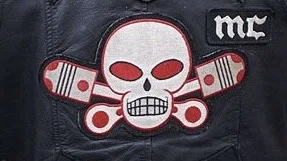
His last request went like this: “When you put me in the dirt, put me in heavy. Keep it loaded.” They nodded, their long, dusty beards scratching against the green-grey ink on their chests. “You’ll need it where you’re going,” the older of the two bikers said, then they killed and buried Kyle Davies beneath a grove of black oaks, right over top the unmarked grave of their brother—or as near as they could reckon.
When Davies came to, with the thistle-sharp fallen leaves stinging his back, his hand went first to his waist. He looked up at the thick, twisting oak branches below the twilight sky and fingered the pistol’s steel features. He wondered if the sun was coming up or going down.
Stale, warm air and the thrum of insects—going down, then.
“Looks like my brothers finally got to you.”
The man leaned against the cracked bark of an oak trunk, chewing a length of dry straw.
He held the straw up and examined it, dissatisfied. “God damn. What I wouldn’t give for a cigarette.”
Davies got to his feet, watching the man. He let his shirt tails fall over the gun grip. The bikers had nabbed him before he could even reach under his pillow for it; there should still be eight .45 caliber rounds in the magazine. Only eight. Best not to use them too soon—or show his hand
The man coughed out a dry laugh. “Some sort of poetic justice burying you here, I guess.”
“Yeah,” Davies said. “Who knew anyone would give a damn about a lowlife like you, Bill.”
Bill put the straw to his lips and shrugged. “It’s family. I know why you did me. It was for Donna. My brothers? Same thing.”
Davies nodded. “I see it that way, too.”
“I didn’t like doing it, Ky. It was just the money. I know you enjoyed it plenty when it came to me, though.”
Davies didn’t meet Bill’s eyes. The pistol felt suddenly conspicuous in his pant waist.
“Your brothers were kinder to me.”
Bill chewed his straw. Davies pondered his killers and their small kindness a little longer.
“Man,” he said at last, “I thought I’d run into more trouble on this side.”
Bill smiled, a smile as dry as his laugh. “You’ll have trouble, Ky. They’re gonna be hunting you.”
“But you’re not?”
“I’ve been here longer. I’m tired.”
Davies waded into the high, brittle grass beyond the perimeter of the oak grove and found the cattle-trodden path. He trudged up the slope and at the crest he looked out west toward the coastal mountain range. The town nestled against the mountains twinkled in the evening glow.
As he stood there, the din of insects, buzzing and chirping, sounded a little softer, a little sweeter than it should. It lulled him, reminded him the day was at its end. But he couldn’t rest. Not yet.
Down the other side of the rise he found the highway. He walked along it for a while, thumb at the ready, but no headlights came. It was the same highway James Dean bought it on, back the other direction; he wondered what that spot would look like from this side.
He kept on. Ahead the round-topped mountains were silhouettes, backlit by the setting sun. He walked on and on—an hour or more—but the sun never did set. He heard the chug of an engine. A moment later he noticed the taillights and the reflection of headlights on the tall grass beside the road. He jogged closer.
A teenage boy lay curled up in the beams, like a fawn bedding down for the night. A white cross had been nailed to the barbed wire fence post here. Davies prodded the boy with the tip of his boot, and the boy looked up with drooping lids.
“You okay there, kid?” Davies asked.
The kid smacked his lips and laid his head back down, tucking his fingers between his thighs.
Davies threw his hand in the direction of the vehicle. “I’m taking your car.”
The boy waved him away.
He got off on Union Road. The windows were dark in all the houses, but their porch lights were on, and the street-lamps beamed down their amber rays, approximating true darkness beyond their cones as he passed below them. He crossed over Thirteenth and pulled off onto the dirt lot across the river from the utilities building. In the dry riverbed, among the brush and scrub trees, a ribbon of dark silver stretched out from the south up and under the Thirteenth Street Bridge. He turned off the car and got out.
The sand and leaves crunched under his feet. When he came to the spot, she wasn’t there.
He dug in the sand with his hands. Nothing. He stood and thought; where was she?
Donna’s body had been discovered right here, half buried in the sand. They pinned it on a mental-case, transient guy everyone in town knew about—the poor bastard was probably still rocking in a padded cell at the state hospital—and so it had been up to Davies to settle the score.
Four men he sent to the grave ahead of himself: Bill, two thugs who got in the way, and Donna’s piece of shit uncle who paid for the wet-work.
Davies felt thirsty. He stepped over to the trickle of water running through the sandy bed, bent down, scooped some up, and sucked it from his hands. It burned going down like the first taste of bourbon. Coughing, he stood up. That’s when the noose came down over his neck.
Reaching for the .45 never crossed his mind. Instinct compelled him to claw at the cord around his throat. They dragged his flailing body through the growth and sand, cursing him all the way.
The big one, clean-shaven with a scar on his chin, said, “You had this coming, Davies. You son of a bitch.”
The guy with the goatee trotted behind, smirking and kicking Davie’s ankles out every time he tried to gain his feet. Big’un tossed the end of the rope over a tree branch, and now he was hoisting Davies up.
Davies’ toes left the ground, churning the air mere inches above it. Big’un tied off the rope while goatee grabbed a fistful of Davies’ hair and looked him in the face.
“Welcome to Hell.”
They left him there, still kicking and clawing and making constricted cries. Davies struggled for a long time after they left, flashbulbs exploding in his brain. His chest felt like it might cave—the pain of emptiness. He grasped the length of rope above his head and tried to pull himself up, but couldn’t.
His chest never caved, and the fireworks just kept going off. He let his body go limp. The pain ever built in his chest, and yet never peaked, never reached the point of collapse. It occurred to him that this might be his existence for the rest of eternity; after the panic, he decided to make the best of it.
He refused to think of Donna, of Bill, of the thugs he had killed and who put him here.
Thoughts of revenge had no place in his new world of pain and bright fractal shapes swirling behind his lids. A strong urge to sleep came over him.
But Donna—he couldn’t shut her out of his mind.
Time passed.
Davies’ body collapsed into a bony puddle. He breathed; his head cleared.
Bill said, “Wake up, Ky.”
Davies looked up, with blurred, sleepy eyes. His throat hurt too bad to talk. Bill squatted down.
“You’re not through yet. Get your shit together,” Bill said, then looked off over his own shoulder toward the riverbed. He made a weary sound. “Me, on the other hand...”
Bill stood and walked off into the ever-darkening evening.
At length, Davies pushed himself up and reclined against the tree trunk. He ran his hand against the riveted track along his throat; it hurt, but not nearly as bad as it should. Nothing felt the way it should. He thought about Donna; if he found her, would they make love, or would they lay down, close their eyes for a moment, for an eternity?
After another length of time, Davies shimmied himself to a standing position, braced against the tree trunk. He stumbled back along the course of dragged dirt and matted brush his body had made and stopped at a certain point to feel around in the tall grass. He found the .45 half-buried in the dirt where it had slipped from his waist while he was struggling. The two thugs, it seemed, had not noticed.
He walked back to where Donna should have been, and there found Bill lying face down, prostrate like a man bereaved. Davies left him there to rest.
He popped the magazine out and laid the gun on the hood of the car. He removed the slide, blew it out and rubbed it with his shirt tails. He disassembled the rest of the pistol, cleaned it as best he could, then put it all back together and cocked it. After that, he set off on foot across the Thirteenth Street Bridge, holding the gun at his side.
He crossed the 101 and kept on for three more blocks until he hit Pine Street and turned left toward the park a block away. He cut through the park following the path diagonal from one corner to the opposite corner. Under the streetlamp, he stood and looked across Spring Street at the brick, mission-style architecture of that historic inn.
The south wing of the building, the restaurant, was big and rounded and lined with windows where the booths were. It was mostly dark in there, except for the lights around a single booth where the two thugs sat throwing down cards and scowling at each other’s plays.
They heard the bell jingle when he walked through the door and rose expectantly from their benches. Davies shot the big one first—two rounds, but only one met its mark. The big man’s chest burst, and he collapsed backward onto his bench, his outstretched arm swiping cards onto the ground.
The other man cursed Davies. “We gonna keep doing this forever?” he said, and Davies wasn’t sure if it was a question or a threat. In either case, only one answer made sense; Davies fired two more shots. The first bullet grazed the man; the second passed through his neck.
The man clutched his throat, covering the wound; blood poured out of his mouth, running into his goatee. He looked almost confused, more confused than when he actually died.
Davies found the old man in his usual room, sitting under the lamp at the center of a web of shadows, reading from a Gideon. The old man looked up from the scriptures, and regarded him with a friendly smile. “Heard you down there,” he said.
Davies stood with the gun at his side, his face in shadow.
The old man gave out an easy laugh. “I’m sorry if you don’t terrify me standing over there in the dark.” He gestured at the open bible on his lap. “Death. Where is its sting now?”
“Your men came after me,” Davies said.
“And you robbed them of their satisfaction. But what did they expect? The water doesn’t even quench your thirst here. Why would revenge be any different?”
“I don’t want revenge. Not anymore. Where’s Donna?”
The old man held his smile, but his eyes told a different story.
“She’s here, of course. In this old hotel, actually. She came to me, you know.”
“Where?”
The old man thought. “Can I ask you something before you go?”
“Where’s Donna?”
“Just—talk to me for a moment.”
The men looked at each other, the one making an effort to appear inviting.
“Sit,” said the old man, with a gesture. “Good. I’m curious. Who runs this town now?”
Davies made an indifferent gesture.
The old man prodded him, “Mexicans? Bikers?”
“I have seen bikers,” Davies offered.
The old man’s grin turned malicious. “You see, I never allowed such elements in my day.
Now there will be drugs in the schools—all manner of immorality. I, at least, kept it outside the city limits.”
“I weep over the unintended consequences of my actions,” Davies deadpanned.
“Did you know she blackmailed me?” the old man said, as if changing tack.
“You denied her her inheritance.”
The old man made an irritated sound. “She’d have shot it into her arm.”
“Maybe she would have gotten help. I would have gotten her help.”
“You think she loved you? You’re just a bodyguard she paid by spreading her legs.”
For the first time since this long twilight began, Davies felt an acute emotion. But, though the old man’s words stabbed him, he made no reply.
“You know she did the same for me? Manipulated me. Her own uncle. And then she had the nerve to blackmail me. As if I forced myself.”
“She was a child, then,” Davies said, simply.
“That’s not how I remember it.”
Davies stood. “Your men looked sleepy down there, but you look like you’ll be sitting here a long time. I don’t think you’ll ever rest.”
The old man glowered up at him, and Davies could see in his eyes this prophecy rang terrifyingly true.
Davies stopped at the open door and said, over his shoulder, “What did she say to you? When she came here?”
“Why don’t you ask her yourself?” the old man said, his amicable facade now vanished.
“I watched her fall asleep in one of these rooms.”
Davies shook his bowed head. “She forgave you, didn’t she? That’s what she said to you, isn’t it? I just want to see her. She’s at peace. I won’t wake her.”
He found the car where he left it. Sitting in the driver’s seat, he watched the dark mountain range and skyline that never quite slept. He wanted to see the sun waning against the flat horizon on the other side. He started the car.
The 101 took him south to the 46. On the 46, going west, he watched the sunlight flee at his approach, and he realized—with only a vague melancholy—he’d never see the sun again.
On the other side of the mountains, he killed the car in the parking lot by the pier. The sea was grey, like the sky, with only a thin line of purple where the two met. He walked onto the sand. A rusty, wind-blasted jungle gym sat half buried right where he remembered it.
He leaned against the paint-chipped bars and drew the pistol from his waist. He released the magazine and thumbed out the remaining four rounds into the sand. For a long time, the shining horizon held his attention, but he knew he’d sleep soon.
Short fiction by Seth Milstein
The Old Cool ’Zine
Friday, November 27, 2026
Admission free. Read it at theoldcool.com
The Old Cool ’Zine presents
by Chadhurst Jainlett Sharpe
From a collection of short stories titled, “Ugly on the Inside”
FRI. NOV. 27'26
Printed for theoldcool.com
The Old Cool presents
Humor
26Nov
by Seth Milstein
Originally published in Exiled In Eugene
theoldcool.com/zine